
Bench Warrants in Middlesex County
Bench warrants in Middlesex County are court orders issued by judges at the Middlesex Judicial District in Middletown. These warrants authorize police to arrest individuals who fail to appear for scheduled court dates. Middlesex County serves approximately 164,000 residents across fifteen towns including Middletown, Cromwell, East Hampton, and Old Saybrook. You can search for active bench warrant information through the Connecticut Judicial Branch online portal or by contacting the court directly.
Middlesex County Quick Facts
Middlesex Judicial District Court
The Middlesex Judicial District handles all bench warrant matters for the county. The court is located in Middletown and serves the entire county. When a judge issues a bench warrant, it enters the PRAWN system. This stands for Paperless Rearrest Warrant Network. Law enforcement across Connecticut can access these records.
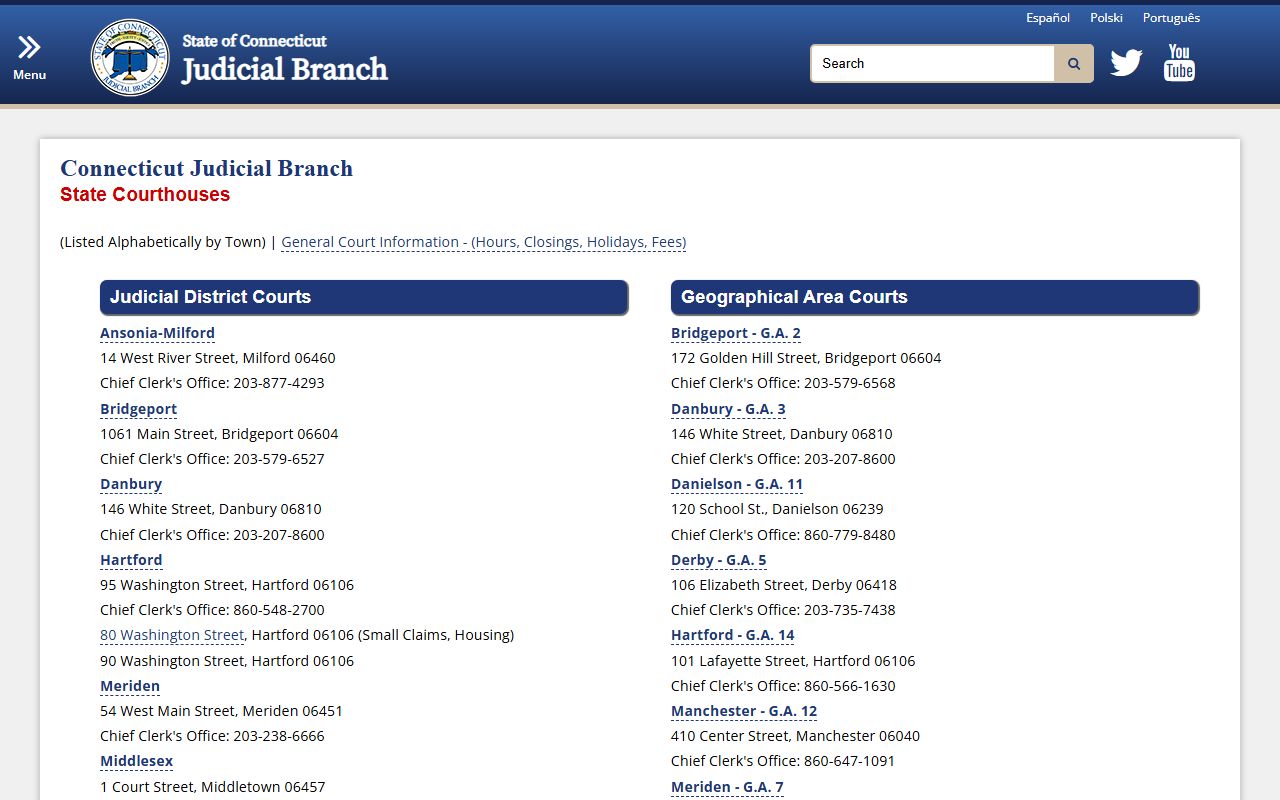
The Middlesex Judicial District courthouse sits at 1 Court Street in Middletown. The Chief Clerk's Office can be reached at 860-343-6400. Court hours are Monday through Friday, typically 8:00 AM to 5:00 PM. Public access terminals are available in the courthouse for looking up case information. These terminals provide free access to court records including pending warrants.
| Middlesex Judicial District |
1 Court Street Middletown, CT 06457 Phone: 860-343-6400 |
|---|---|
| G.A. 9 at Middletown |
1 Court Street Middletown, CT 06457 Phone: 860-343-6445 |
| Hours | Monday through Friday, 8:00 AM to 5:00 PM |
| Website | jud.ct.gov/directory/courthouses |
How to Search Middlesex County Bench Warrants
You have several options for checking bench warrant status in Middlesex County. The Connecticut Judicial Branch provides online access to certain warrant types. The PRAWN system tracks Failure to Appear warrants and Violation of Probation warrants. These can be searched through the state portal at jud.ct.gov.
To search online, visit the Connecticut Judicial Branch website. Navigate to the case lookup section. You can search by name, town, or court location. The system shows active warrants that have been entered into the electronic database. Not all warrants appear online immediately. Recent issuances may take time to process into the system.
For in-person searches, visit the Middlesex Judicial District courthouse. The public access terminals are free to use. Court staff can assist with basic navigation. However, they cannot provide legal advice. Bring identifying information such as the person's full name and date of birth. This helps narrow search results. The court address is 1 Court Street, Middletown, CT 06457.
Phone inquiries are also accepted. Call the Chief Clerk's Office at 860-343-6400. Have the case number if available. This speeds up the lookup process. Staff can confirm whether a warrant exists and provide basic status information. For detailed records, an in-person visit may be required.
Types of Bench Warrants in Middlesex County
Middlesex County courts issue several types of bench warrants. Each serves a different purpose under Connecticut law. Understanding the differences helps when searching for warrant information.
Failure to Appear warrants are the most common type. These are issued when a defendant misses a scheduled court date. The warrant authorizes police to arrest the person and bring them before the court. FTA warrants apply to criminal cases, motor vehicle matters, and infractions.
Violation of Probation warrants are issued when someone breaks probation terms. The Department of Adult Probation requests these warrants. A judge reviews the alleged violations before signing. VOP warrants are serious matters. They can result in immediate arrest and potential incarceration.
Order to Incarcerate warrants are used when someone fails to pay fines. They also apply when a person must serve a sentence. These orders direct law enforcement to transport the individual to a correctional facility. The Department of Correction handles these transfers.
Note: All warrant types are entered into the PRAWN system for statewide law enforcement access.
Middlesex County Law Enforcement Contacts
Several police departments serve Middlesex County. Each can execute bench warrants within their jurisdiction. Many smaller towns rely on State Police coverage through Troop F in Westbrook.
The Middletown Police Department serves the county seat. Their address is 222 Main Street Extension. The main number is 860-638-4000. As the largest municipal department in the county, they handle many warrant executions.
Cromwell Police Department covers the northern part of the county. They are located at 5 West Street. Their phone number is 860-635-2256. East Hampton Police serves the eastern towns. They are at 1 Community Drive with a main line of 860-267-9544. Old Saybrook Police handles the coastal area. Their station is at 36 Washington Street. The number there is 860-395-3142.
Connecticut State Police Troop F provides coverage for many rural towns. Their barracks is in Westbrook. The phone number is (860) 399-2100. State troopers can execute warrants anywhere in the state. This makes them valuable for county-wide warrant service.
The Middlesex County Sheriff's Office handles civil process. This includes serving certain types of warrants. Their office is at 265 DeKoven Drive in Middletown. The phone number is (860) 344-3411. They do not perform criminal arrests but play a role in the warrant process.
Towns Served by Middlesex County Courts
The Middlesex Judicial District and G.A. 9 serve fifteen municipalities. All bench warrants for these towns are processed through the Middletown courthouse. When searching for warrants, knowing the town of residence helps narrow results.
The towns served include:
- Chester, Clinton, Cromwell, Deep River, Durham
- East Haddam, East Hampton, Essex, Haddam, Killingworth
- Middlefield, Middletown, Old Saybrook, Portland, Westbrook
Each town has different police coverage arrangements. Larger towns have their own municipal police departments. Smaller towns contract with State Police or neighboring departments. This affects how warrants are executed in each community.
Resolving Bench Warrants in Middlesex County
If you discover an active bench warrant, taking prompt action is important. Ignoring a warrant can lead to arrest at inconvenient times. There are several ways to address the situation in Middlesex County.
Contacting an attorney is often the best first step. A lawyer can review the warrant and advise on options. They may be able to arrange a voluntary surrender. This typically results in better outcomes than being arrested unexpectedly. The Connecticut Bar Association provides lawyer referral services.
Self-surrender at the courthouse is another option. Go to the Middlesex Judicial District during business hours. Bring identification and any paperwork related to the case. Court security will process the warrant. You may be released with a new court date. Some situations require posting bond.
For Failure to Appear warrants, explaining the reason for the missed date can help. Valid reasons include medical emergencies or lack of notice. Bring documentation to support your claim. The judge may recall the warrant and reschedule the hearing.
Note: Never ignore a bench warrant. The warrant remains active until resolved. Law enforcement can execute it at any time.
Cities in Middlesex County
Middlesex County includes several cities and towns. The largest is Middletown, which serves as the county seat. All municipalities file court matters and process warrants through the Middlesex Judicial District in Middletown.
Other communities in Middlesex County include Cromwell, East Hampton, Old Saybrook, Durham, Portland, East Haddam, Deep River, Essex, Westbrook, Chester, Clinton, Haddam, Killingworth, and Middlefield. All use the Middletown courthouse for warrant matters.
Nearby Counties
These counties border Middlesex County. Warrant jurisdiction depends on where the case originated. Cases must be resolved in the court that issued the original warrant.